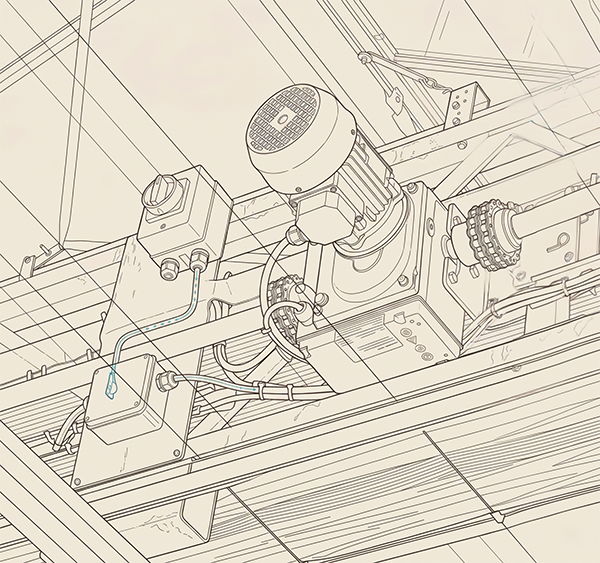
Most glasshouse projects are shaped before a contractor is ever appointed.
The brief that reaches procurement reflects whoever has already been in the room — the operational team, a previous contractor's recommendations, assumptions carried forward from a build that may no longer describe how the facility works.
We enter through maintenance, because that relationship is what makes a later brief accurate. When decisions need making, the knowledge to make them well already exists — it doesn't have to be assembled under time pressure during a tender. And support doesn't require a project to exist: a heating fault, a recurring alarm, a controls system that's become unpredictable are all legitimate places to start.
The first conversation costs nothing, and where the facility looks a suitable fit, so does an initial site visit. If a full written review is the right next step, we scope it to your site and agree the fee before any work begins.
This is where most relationships begin.
We look after heating, controls, ventilation, screens, irrigation and glazing as one system, not as separate call-outs. Interactions are watched across seasons; modifications are checked for their effect on adjacent systems, not just the part in front of us.
The result isn't only a reliably maintained facility. It's a working knowledge of how your glasshouse actually behaves — the knowledge that makes every later decision easier, and usually cheaper, to get right.
Explore Greenhouse Heating Explore Greenhouse Screening
For when you need clarity before spending money — a fault that keeps returning, or a project nobody's quite sure how to scope.
An independent written assessment is something the trade rarely offers, because almost every "free survey" is a sales visit with a quote attached. Ours isn't: we're independent of manufacturers and product ranges, so the recommendation isn't steered by stock, catalogue or supplier allegiance. If BM Greenhouses later quotes to deliver the works, that's a separate decision for you to make. Often, the honest answer is to do less than you feared.
Every review sets out:
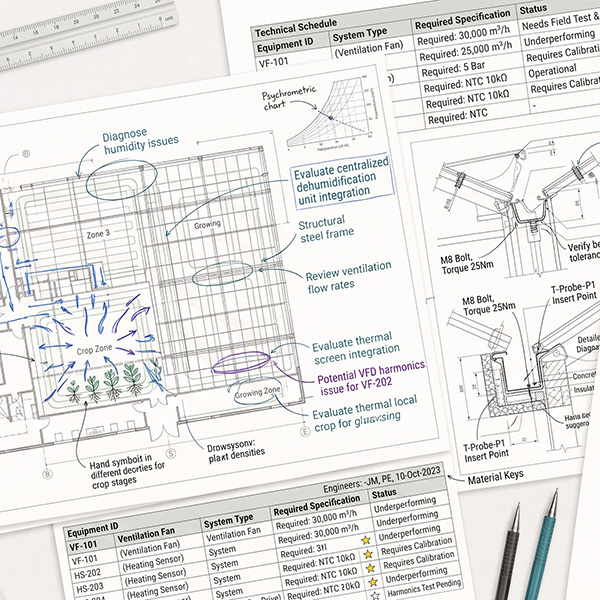
A typical review is a single day on site. Larger or more technical facilities are scoped across two. We agree the scope and fee before anything begins, and the cost reflects what's involved — our time, a specialist contractor's where the site needs one, and travel.
Because the review is independent, it's yours. You're free to take it to any supplier for a quote — there's no obligation for the work to come back to us.
Where BM Greenhouses goes on to deliver the works, the review fee may be credited against them by prior agreement.
Where a project needs a clear basis for procurement, pricing or phased delivery, we translate the recommended path into a procurement-ready document: defined scope, assumptions and exclusions, package and interface notes, and a clear basis for tendering or comparing contractors.
This isn't an automatic step after a review — only where a formal procurement brief is genuinely needed.
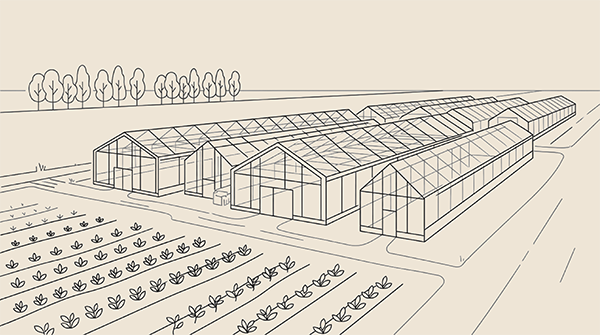
When BM Greenhouses delivers, you deal with one point of contact for the whole project. Structure, heating, controls, screens, irrigation and the services around them are coordinated through us and drawn from a defined network of contractors Byron has worked with for years — chosen for an established working history rather than availability. The commercial side runs through us too, so you're not managing several companies and several invoices to reach a single outcome.
What we bring isn't a fabrication workshop competing on scale. It's interface ownership: someone making sure the parts work as one environment from day one, grounded in how the facility actually operates rather than documentation alone. Often this follows a maintenance relationship; it's always informed by it.
Planning a new facility rather than working on an existing one? That starts earlier — with whether to build, and what to build.
Planning a new facility Commercial greenhouses
Interface ownership is the difference between technically correct components and a facility that performs as one environment.
If you take the works to another supplier, we can stay on as your project adviser. Having scoped the facility, we're well placed to check that what gets delivered holds to what was agreed — that materials, methods and sequencing match the brief, and that any departure from it is a deliberate, understood decision rather than a quiet drift during the build.
This is independent technical oversight on your side of the table: protecting the investment you've made in getting the scope right, whoever carries out the work. It's a defined, scoped engagement — agreed visits and checkpoints against the project, set out before it starts — rather than an open-ended watching brief.
Request a Conversation Arrange a Site Visit Send Drawings or Schedules
The first conversation costs nothing. If a site visit or structured review is needed, the scope and any cost are agreed before it proceeds.
BM Greenhouses
Cawley Priory, South Pallant,
Chichester, West Sussex, PO19 1SY