
Specialist advisory, maintenance and installation support for institutional and commercial glasshouse facilities.
Seven years is what it took to solve a problem that had existed since the original build.
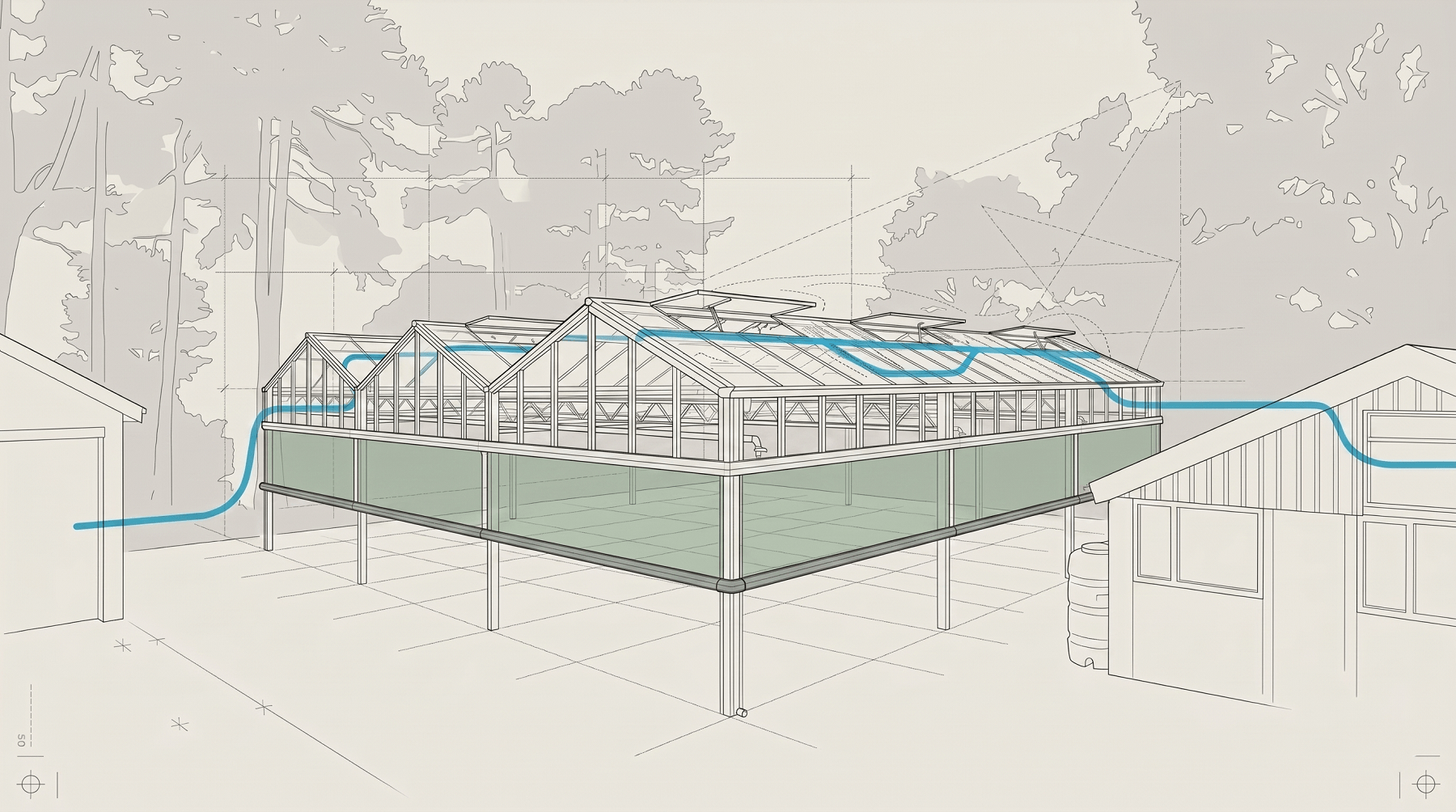
The canopy screening at RHS Garden Wisley had been unresolved since the glasshouse was first constructed.
The originally intended motorised system had never been implemented. By the time it needed addressing, Byron Meyer had been maintaining the structure for years.
He already knew the canopy’s airflow behaviour.
He already knew why the motorised route was no longer financially viable. He already knew the geometric constraints that would rule out an off-the-shelf alternative. A contractor arriving at that point without that knowledge would have priced the wrong solution or found one that compromised airflow to achieve shade. The solution delivered worked because the knowledge that shaped it had been built over years of being on site — not assembled during a tender process.
That is what a maintenance relationship produces.
Not only a serviced facility. Operational knowledge that, when a problem surfaces or a decision needs to be made, is already in the room.
Operational knowledge accumulates in stage one and changes the quality of every stage that follows.
Who This Is For
BM Greenhouses works with:
Research institutions and university glasshouse facilities
where environmental repeatability, calibration integrity, and procurement governance are non-negotiableEducational facilities
where term-time constraints require maintenance and works to be planned around the facility’s schedule, not a contractor’sEstates and walled garden environments
where layered system history, heritage fabric, and live-site constraints exceed what a standard contractor inspecting for the first time can account forBotanic gardens
where living collections and evolved microclimates require operational knowledge that no site visit can replicateSelected commercial growing operations
where integration, phased upgrades and long-term maintainability make an advisory-first relationship more productive than going straight to tender
BM Greenhouses is not a volume greenhouse contractor.
It is not positioned for buyers whose primary requirement is the fastest or cheapest route to a standard installation.
Every system affects the others — which is why treating them as separate scopes produces incomplete answers.
Three Ways to Engage
Maintenance & Reliability Support
Structured maintenance treating the facility as one environment. Heating, controls, ventilation, screens, irrigation and glazing considered together. This is where most BM Greenhouses relationships begin, and where the operational knowledge that improves every subsequent decision is built.
Glasshouse Review & Options Report
A paid independent technical review before design, procurement or works are agreed. The fee is calculated on site size, complexity and scope. Every report records the facility as found, defines the actual presenting problem, identifies risks, sets out practical options with their relative implications, and recommends a next step.
Coordinated Delivery & New Facilities
Full delivery or defined scope elements for refurbishment, redevelopment or new capacity. Coordinated so that structure, heating, controls, screens and irrigation work together from day one. Often preceded by a maintenance relationship. Always informed by operational knowledge rather than documentation alone.
These are not stages to be followed in sequence.
The appropriate entry point depends on where the facility currently is.
The Wisley screening solution is the clearest demonstration of what this model produces.
That full account is on the Case Studies page.
Most enquiries begin with something specific.
A fault that keeps returning, a controls system that has become unpredictable, an upgrade that nobody is quite sure how to scope. Those are exactly the right starting points.
It is not necessary to have a project defined, a budget agreed, or a problem fully understood before making contact. Early conversations are almost always more useful than late ones.
Three options were assessed. Two were rejected before procurement ever opened.